AI isn’t reading your content
♻️ It’s testing whether it can reuse it, and more!
Hey Readers 🥰
Welcome to today’s edition, bringing the latest growth stories fresh to your inbox.
And just a quick heads-up! If you stumbled upon us through a friend, make sure to subscribe below! That way, you’ll never miss out on the trending stories.
♻️The Extraction Surface War
Last quarter, a brand rewrote nothing. No new insights. No new POVs. No fresh “thought leadership.”
They only changed how answers were shaped on the page. Same facts. Same claims. Same proof.
Within weeks, their content started appearing verbatim inside AI answers, summaries, and agent responses while competitors with better writing vanished.
That is the war most marketers are not even aware they are fighting.
AI visibility is no longer about who explains something best. It is about who makes information easiest to extract without distortion. If a system cannot safely lift your answer, it will not reuse it. Period.
AI does not evaluate content. It evaluates risk.
When an AI system scans a page, it is not judging tone, creativity, or persuasion. It is running a safety check.
- Can this claim be isolated cleanly?
- Can this definition stand alone?
- Can this proof travel without context breaking?
If the answer is no, the system moves on.
This is why eloquent pages with flowing narrative structure underperform blunt pages with rigid hierarchy. The former introduces ambiguity. The latter reduces it.
Extraction rewards predictability.
Layout is now the real competitive surface
Most brands lose here. They write headlines that tease instead of concluding. They bury answers under storytelling. They separate claims from evidence. They mix multiple intents in a single section.
Humans might enjoy that. AI systems do not. Pages that get reused follow a repeatable pattern:
- One question per section.
- One direct answer in the first sentence.
- Proof immediately underneath.
- No dependency on surrounding paragraphs.
This is why tools like Semrush One have become operationally critical for teams working on AI visibility. Not because of rankings, but because it exposes where content lacks structural clarity, semantic consistency, or extractable answer blocks across a site.
Teams using it are not guessing what AI can parse. They are auditing it.
If you want to see where your pages break under extraction pressure, you can try Semrush One for free for 7 days and actually observe which sections are structurally invisible.
Semantic consistency beats originality
Here is the uncomfortable part seasoned marketers eventually accept. The original structure is a liability.
AI systems trust repetition across contexts. When your definitions, headings, and answer formats stay consistent across pages, the system gains confidence that your brand is a stable source.
This is how citation gravity forms. One page being extractable helps the next one get surfaced faster. Over time, the brand becomes the default reference, not because it wrote more, but because it removed uncertainty.
Systems win. Pages follow.
The brands winning AI visibility are not optimizing URLs. They are designing extraction systems.
They treat content like modular answers, not essays. They design layouts for reuse, not reading flow. They reduce interpretation risk before chasing persuasion. This is the shift. Visibility is no longer about saying the smartest thing. It is about saying the safest thing to reuse.
Partnership with Insense
HACK: Turn One Creator Drop Into Weeks of Q5 Ads
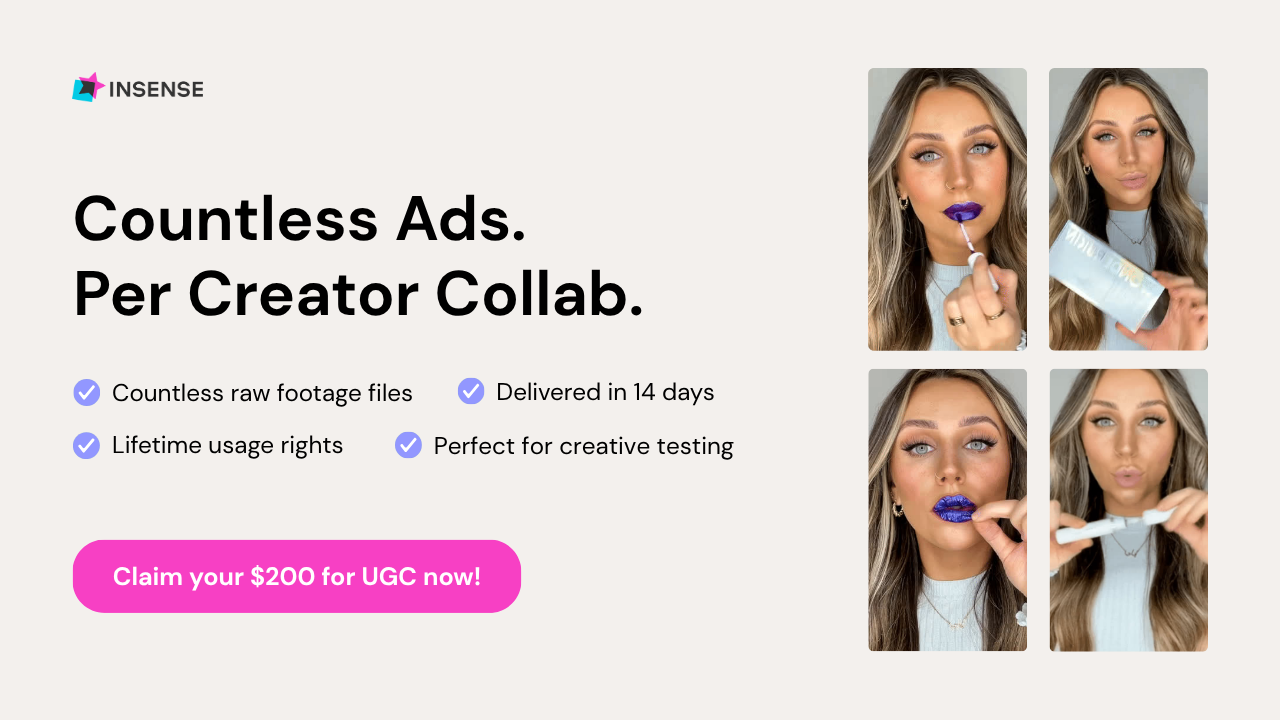
This is the scramble phase of Q5, the moment when every ad dies at once and performance hinges on how fast you can ship fresh creatives. Doing nothing means pouring budget into creatives that stopped converting yesterday.
With Insense, one creator drop gives you enough raw footage to fuel an entire round of testing without blowing up your team’s bandwidth.
- 20+ raw assets per creator, you can turn into countless variations.
- Fast 14-day turnaround so you stay ahead of Q5 spend.
- Lifetime usage rights, so every winning cut keeps earning for months.
That’s why 2,000+ brands like Quip, Revolut, and Matys rely on Insense to scale UGC without killing bandwidth.
Book a free strategy call by December 19th and get $200 for your first campaign!
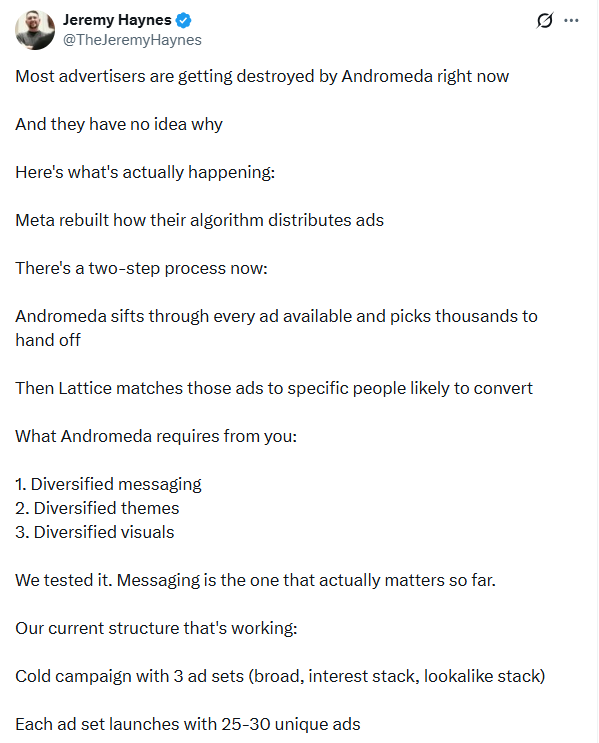
🗝️ Tweet of the Day
Advertise with Us
70% of email clicks are bots but not with The Playbook. Reach real human buyers with verified clicks and only pay for actual engagement.
We'd love to hear your feedback on today's issue! Simply reply to this email and share your thoughts on how we can improve our content and format. 😍